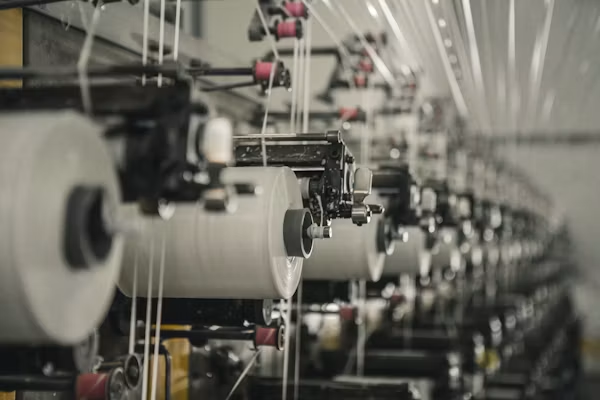
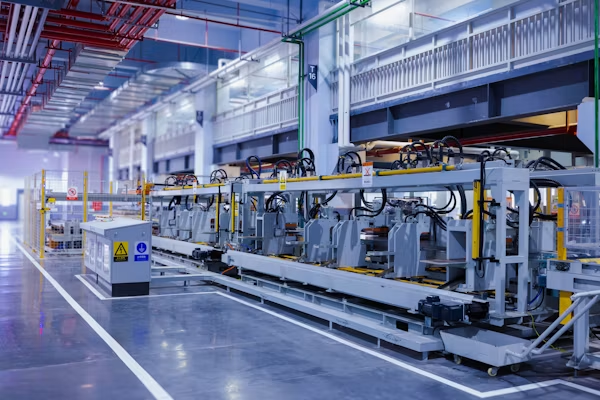
Sourcing from China can help businesses access a huge manufacturing ecosystem, competitive pricing, and a wide range of products. But finding the right supplier is only the beginning. Here is what businesses should consider before placing an order.
Introduction
China is one of the world’s largest manufacturing hubs, offering businesses access to suppliers across electronics, consumer products, packaging, machinery, textiles, accessories, and many other industries.
But successful sourcing is not simply about finding the lowest price.
The real challenge is finding the right supplier, understanding product requirements, verifying quality, managing communication, and making sure your products arrive as expected.
A well-organized sourcing process can reduce unnecessary risks and make international purchasing much easier.
1. Clearly Define What You Need
Before contacting suppliers, define your product requirements as clearly as possible.
Consider:
- Product specifications
- Materials
- Dimensions
- Quantity
- Packaging
- Branding requirements
- Quality standards
- Target price
- Delivery requirements
The more precise your requirements are, the easier it becomes to compare suppliers accurately.
2. Find the Right Suppliers
China has thousands of manufacturers and trading companies, but they are not all suitable for every project.
A supplier that is excellent for one product may not have the experience, equipment, or production capacity required for another.
When evaluating suppliers, consider:
- Manufacturing experience
- Product specialization
- Production capacity
- Communication
- Certifications where relevant
- Previous export experience
- Minimum order quantities
- Pricing and payment terms
The goal is not simply to find a supplier. It is to find a supplier that fits your specific business requirements.
3. Verify Before You Commit
Supplier verification is one of the most important parts of international sourcing.
Before placing a significant order, businesses should take reasonable steps to confirm that the supplier is legitimate and capable of producing the required product.
Depending on the project, this can include reviewing company information, requesting samples, checking production capabilities, and conducting quality inspections.
A small amount of verification before an order can prevent much larger problems later.
4. Don’t Focus Only on Price
A low quotation can look attractive, but price is only one part of the equation.
Consider the complete cost of sourcing:
Product cost + packaging + inspection + shipping + customs + other associated costs
A supplier offering a slightly higher unit price may ultimately provide better value if the quality is more consistent and the production process is more reliable.
5. Control Quality Before Shipment
Quality control should not begin after the products arrive.
Depending on the product and order size, businesses may consider:
- Pre-production checks
- Sample approval
- During-production inspections
- Pre-shipment inspections
- Packaging checks
The right approach depends on the product, supplier, order size, and business requirements.
6. Plan the Logistics
Once production is complete, the products still need to reach their destination.
International logistics can involve:
- Freight arrangements
- Export documentation
- Customs procedures
- Shipping schedules
- Warehousing
- Final delivery
Planning these elements early helps avoid unnecessary delays and unexpected costs.
A Better Way to Approach Sourcing
Successful sourcing is ultimately about building a reliable process.
You need to know:
What are we buying?
Who are we buying from?
How do we verify the supplier?
How do we control quality?
How will the products reach us?
When these questions are addressed before production begins, international sourcing becomes much more manageable.
Final Thoughts
China offers enormous opportunities for international businesses, but successful sourcing requires more than simply finding a supplier online.
It requires research, communication, verification, quality control, and careful logistics planning.
Whether you are sourcing your first product or looking to improve an existing supply chain, having the right process can make a significant difference.
Ready to Start Sourcing?
Tell us what you are looking for, and let’s explore the right sourcing approach for your business.